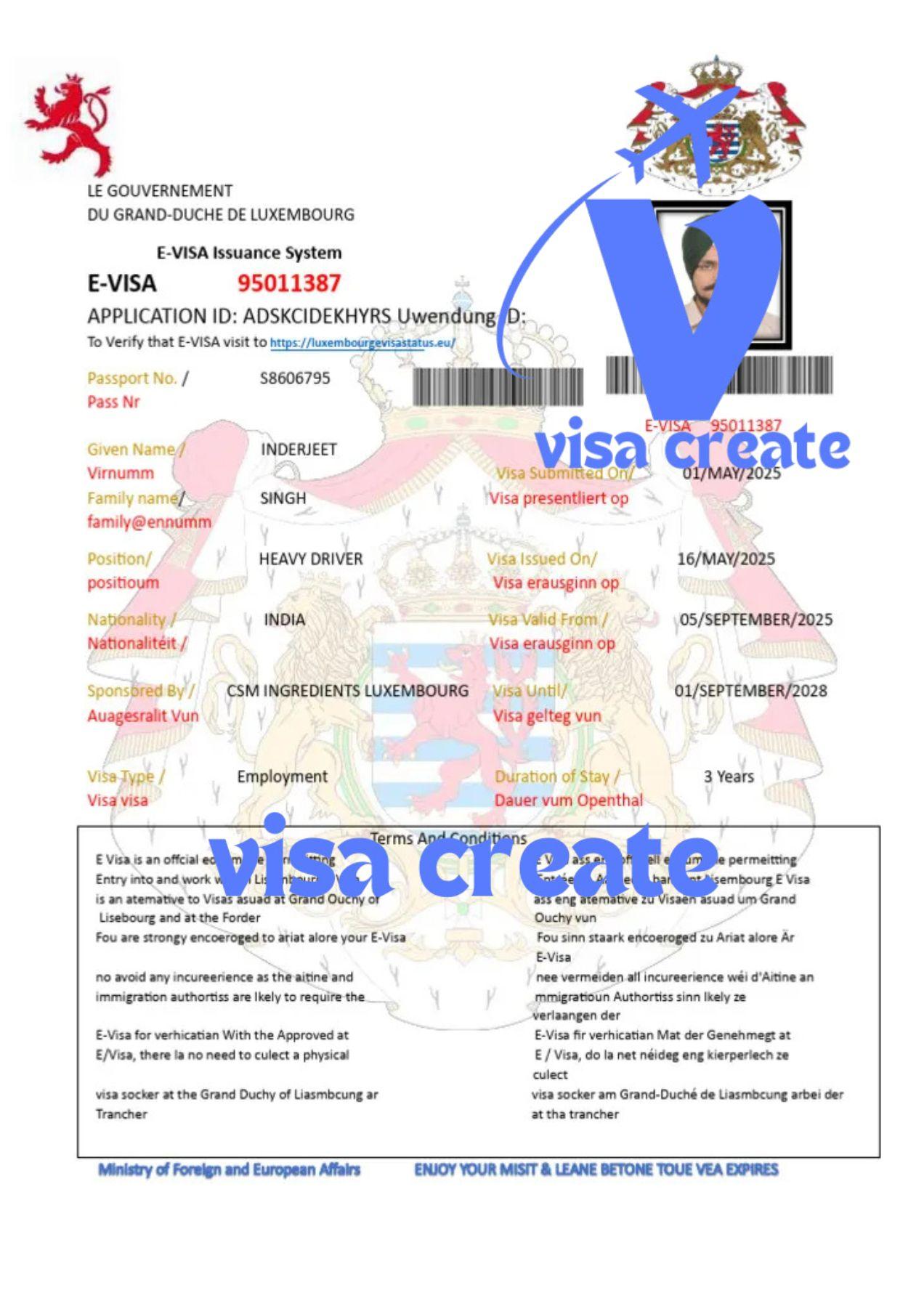
Here’s a step-by-step guide to getting a work visa / work permit in Luxembourg 🇱🇺 as a Non-EU (third-country) citizen — including what you need, how it works, and the main steps:
🇱🇺 1) Get a Job Offer First
Before anything else, you need a concrete job offer or contract from a Luxembourg employer — you can’t apply for a work visa without that first. Employers typically need to show that they can’t fill the job from the local/EU labour market before you’re hired.
🧹 2) Employer Posts Your Job with ADEM
Your future employer must first declare the vacant position to the Agence pour le Développement de l’Emploi (ADEM) — Luxembourg’s national employment agency. ADEM will check if the job can be filled locally (by EU/EFTA or legally-resident workers). If no one suitable is found within a few weeks, the employer gets a certificate allowing them to hire you (a “labour certificate”).
You’ll need this certificate as part of your work visa application.
📄 3) Apply for a Temporary Authorisation to Stay
As a non-EU citizen planning to work more than 3 months, you must apply before arriving in Luxembourg for a temporary authorisation to stay as a salaried worker with the Directorate of Immigration (Ministry of Foreign and European Affairs).
You’ll usually submit this application together with:
This authorisation is the basic work right approval — it’s often what people mean when they say “work permit.”
✈️ 4) Apply for a National Visa (Type D)
If your nationality requires a visa to enter the Schengen area, you’ll next apply for a long-stay national visa (Type D) at the Luxembourg embassy or consulate in your home country using the temporary authorisation to stay as the basis for your visa.
Once the visa is granted, you can travel to Luxembourg to complete the next steps.
🇱🇺 5) Enter Luxembourg & Register
After arriving in Luxembourg:
Declare your arrival to the local commune (city/town government office) — usually within a few days.
Complete any medical check or biometrics if required.
Then apply for your residence permit for salaried workers (third-country national). This is your actual long-term residence card which doubles as a work permit.
This residence permit confirms you can live and work in Luxembourg long-term under the job you were hired for.
🧠 6) Important Notes & Variations
📌 Short Work (< 90 Days)
If you plan to work less than 90 days, you still generally need permission before starting work — including a work permit application, unless exempt (e.g., certain business visits, entertainers, intra-EU transfers).
📌 Highly Skilled Workers (EU Blue Card)
If you’re highly qualified (e.g., degree, high salary), you can aim for an EU Blue Card, a special permit for skilled workers with different salary and contract requirements.
📌 Self-Employed or Business Owner
If you want to run your own business or be self-employed, there’s a separate procedure involving business plans and economic viability checks before a self-employment residence permit can be issued.
🗂️ Typical Timeline
Job offer/contract and labour certificate: Weeks to months
Temporary authorisation to stay: Up to ~3 months (varies)
Visa appointment & processing: Weeks, depending on embassy
Residence permit card: Arrive in Luxembourg then weeks/months
Processing times vary greatly by country and completeness of your application.
🧑🤝🧑 What You’ll Need (Typical Documents)
✔ Passport (valid)
✔ Employment contract approved under Luxembourg labour law
✔ ADEM certificate allowing the employer to hire you
✔ CV and qualification certificates
✔ Temporary authorisation to stay application
✔ Visa application (if required based on nationality)
✔ Medical check and commune registration forms after arrival
🧠 Quick Summary
Secure a job offer from a Luxembourg employer
Employer gets ADEM labour certificate
Apply for temporary authorisation to stay (work permit basis)
Apply for national visa (Type D) if required
Arrive, declare arrival, get residence permit
Live and work in Luxembourg legally
If you want, I can walk you through the exact steps and forms you’ll fill out at the Luxembourg embassy in your country (e.g., from Estonia or another place) — just tell me where you’re applying from! 🇱🇺✨