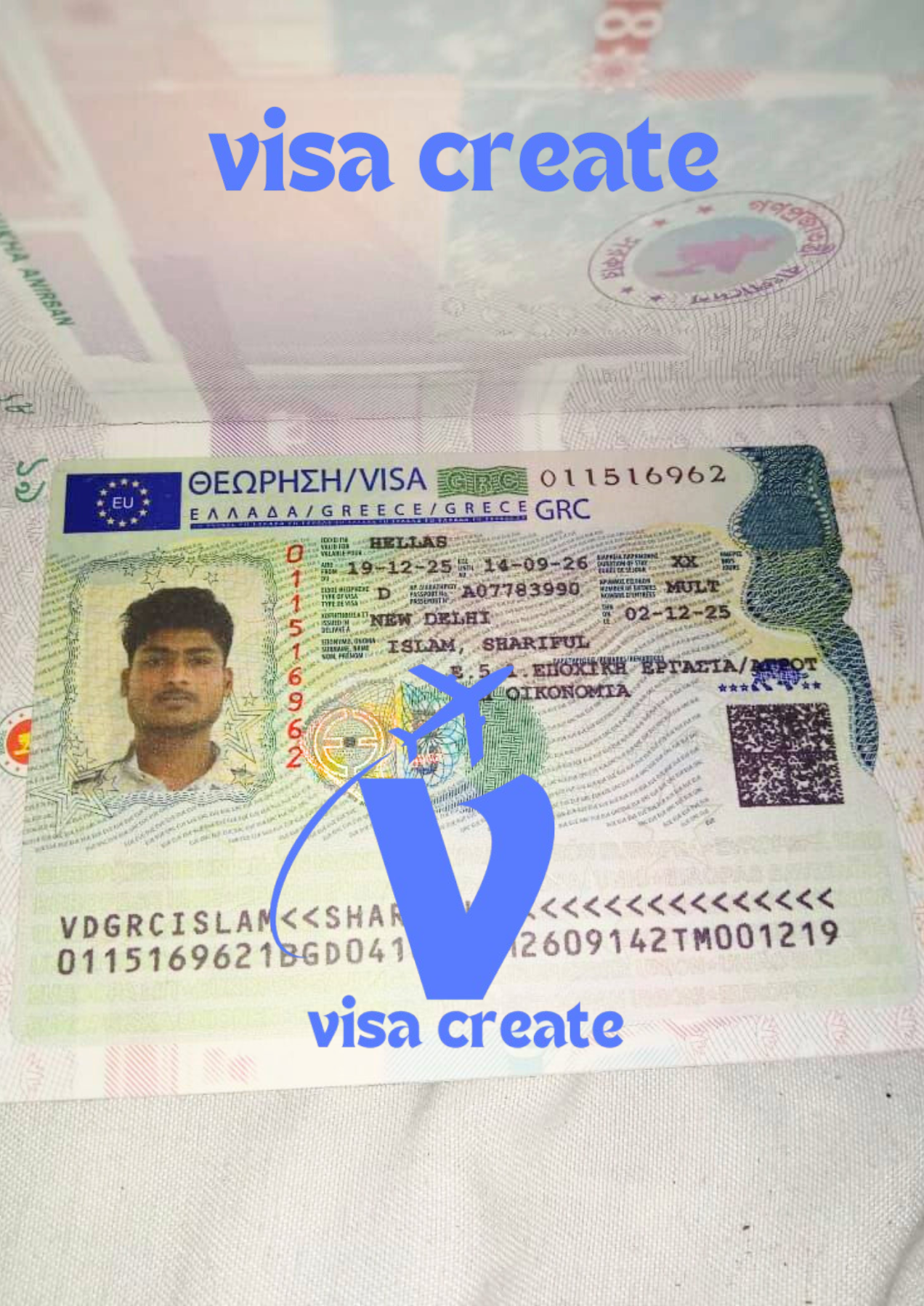
Here’s a clear step-by-step guide on how Non-EU citizens can get a work visa (and work permit/residence permit) to live and work in Greece:
🇬🇷 1) Get a Job Offer First
You must first secure a job offer from a Greek employer before starting any visa process.
Greece doesn’t allow non-EU citizens to arrive and then look for work. Your future employer usually has to begin the paperwork with Greek authorities.
📑 2) Employer Applies for Work Approval
Before you can apply for a visa, your employer typically must get official permission to hire you by submitting your contract and documents (e.g., proof that no suitable EU worker could fill the role) to Greek labor authorities (Decentralized Administration / Labour Office).
Once approved, your employer will receive a work authorization letter or permit that allows you to move to the next stage.
✈️ 3) Apply for a National Long-Stay Work Visa (Type D)
With the work approval, you (or sometimes your employer) apply at the Greek embassy or consulate in your home country for a Type D work visa. This visa lets you enter Greece for employment purposes.
Typical required documents include:
- Valid passport (usually >6 months validity)
- Employment contract & employer invitation/authorization
- Diplomas / qualification proof
- Criminal background check
- Health certificate (fitness to work)
- Passport photos & visa fee
(Exact list can vary by embassy.)
Processing times vary widely — often several weeks to a few months.
🪪 4) Enter Greece & Apply for a Residence Permit
Once your Type D visa is granted, you travel to Greece. Within the first 30–90 days after arrival, you must:
➡️ Apply in person for a residence permit with work authorization at the local Decentralized Administration office.
This permit legally allows you to stay and work long-term in Greece.
Documents often include:
- Passport & visa
- Employment contract
- Proof of address (rental agreement)
- Proof of health insurance
- Biometric photos and data
You’ll usually be issued a temporary receipt first while your full residence permit is processed — official cards can take a few months to arrive.
📊 5) Get Tax & Social Security Numbers
Once you begin working/settling in Greece you should register for:
- AFM: Greek tax number
- AMKA: Social security number (for healthcare and contributions)
These are essential for opening a bank account, working legally, filing taxes, etc.
🧠 6) Other Visa Types to Know
Depending on your situation, there are other pathways:
🔹 EU Blue Card
For highly-skilled professionals with strong qualifications and higher salaries. It’s a combined work & residence permit with different requirements like salary thresholds.
🔹 Seasonal Work
For specific short-term work (e.g., tourism, agriculture). These have separate quotas and rules.
🔹 Digital Nomad Visa
If you plan to work remotely for a foreign employer (not a Greek company). This is not a traditional work permit but allows residence while working remotely. It has income and insurance requirements and is separate from the employment work visa process.
📌 Quick Recap
- Job offer from a Greek employer (mandatory)
- Employer applies for work approval in Greece
- Apply for a national Type D visa at Greek embassy
- Enter Greece & apply for residence permit with work rights
- Register for AFM & AMKA once in Greece
If you want, I can also help you find job sectors in Greece that frequently hire non-EU workers (like IT, tourism, teaching English), and what skills or salaries make that easier! 👩💼🇬🇷